I come from after-sales and engine reconditioning: I have seen a great many engines from the inside and a great many invoices. I can tell a fault that arises from use from one that was already part of the deal.
A hidden-defects case is not won by whoever is most indignant. It is won by whoever proves the fault existed before delivery, that it was not visible to the naked eye and what it costs to put right.
Cases I take
- Engine, gearbox or clutch failing within a few thousand kilometres of purchase.
- Clocked odometer, cross-checked against the service history and the roadworthiness test records.
- Imported vehicles or repaired write-offs sold as sound.
- Warranty refused by the seller or the workshop: who answers for what.
- Trucks, vans and used machinery with the same problem.
- Quantifying the defect: what the repair costs and how much value the vehicle loses.
What I need from you
- Sale contract or invoice and the advertisement as it was published.
- Technical data sheet, registration document and roadworthiness test history.
- Service history and any invoices handed over by the seller.
- Later repair estimates and invoices, with the workshop's report.
- Readings from the vehicle's control units and fault memory, where the vehicle is available.
- Correspondence with the seller: emails, WhatsApp messages and formal notices, plus dated photos or videos of the fault.
What the law says
- Arts. 1484 et seq. of the Spanish Civil Code: remedies for hidden defects, within six months of delivery.
- Statutory guarantee of conformity (arts. 114 et seq. of the consolidated Consumer Protection Act), where the seller is a trader: three years from delivery, which for a used vehicle may be shortened by agreement but never below one year (art. 120.1). If the defect appears within the first two years, the law presumes it was already there on delivery (art. 121.1); for used goods that presumption may be agreed shorter, but never below the agreed guarantee period.
- Art. 1101 of the Civil Code: damages for breach.
- Arts. 1269 and 1270 of the Civil Code: fraud in the formation of the contract.
- Criminal proceedings for fraud (art. 248 of the Criminal Code) where the odometer has been tampered with.
What you get
Report produced with the Perito Tacho Method (MPT®): ten phases common to every speciality, with the defensibility index and the stress test.
- Technical diagnosis of the defect and its origin.
- Age of the defect: why it already existed at the time of delivery.
- Whether or not it was detectable on a normal pre-purchase inspection.
- Valuation of the repair and of the vehicle's loss in value.
- Ordered conclusions your lawyer can use as they stand.
- Ratification and defence of the report in the courtroom.
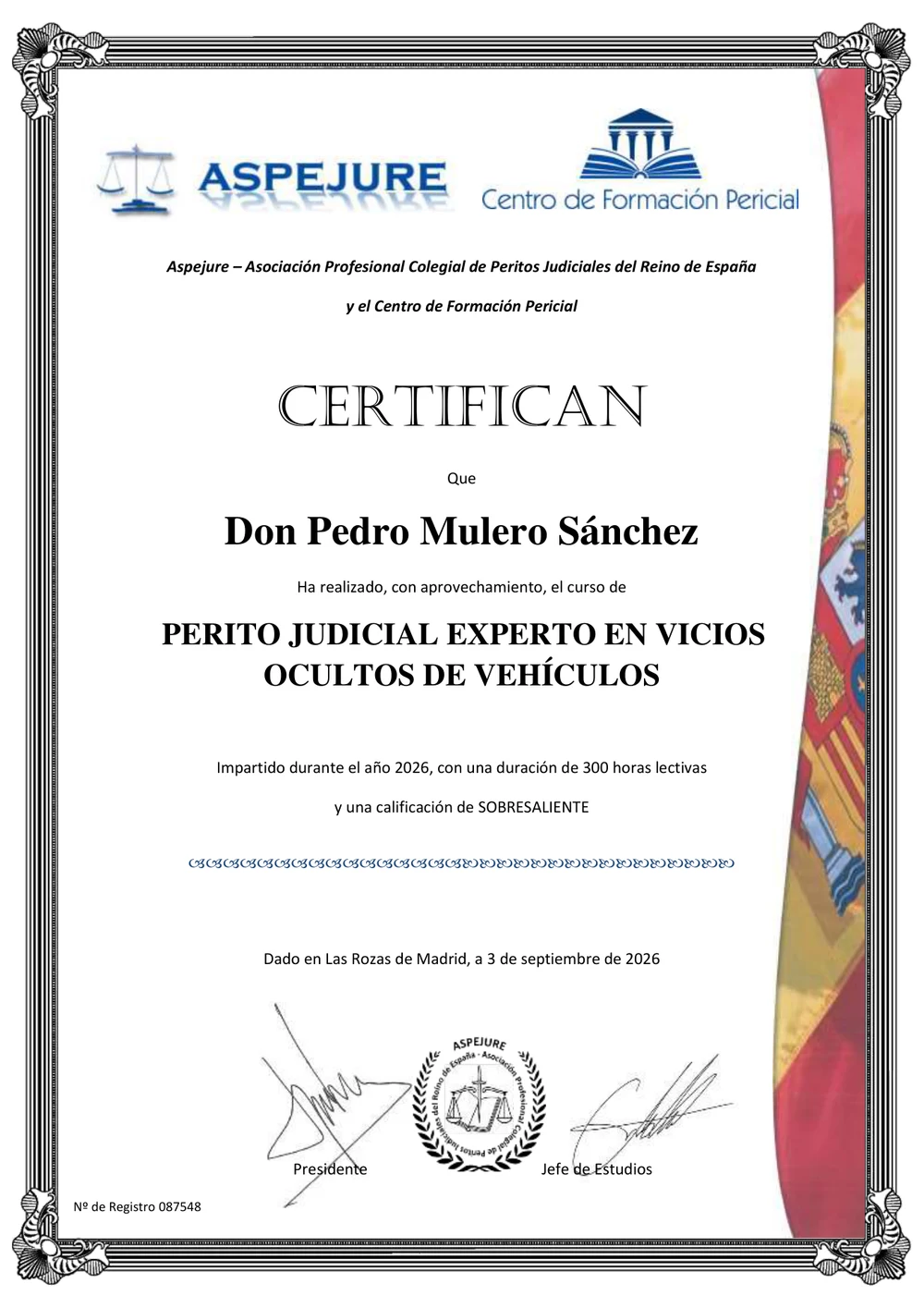 Court Expert in Hidden Vehicle Defects - 300 hours - Distinction
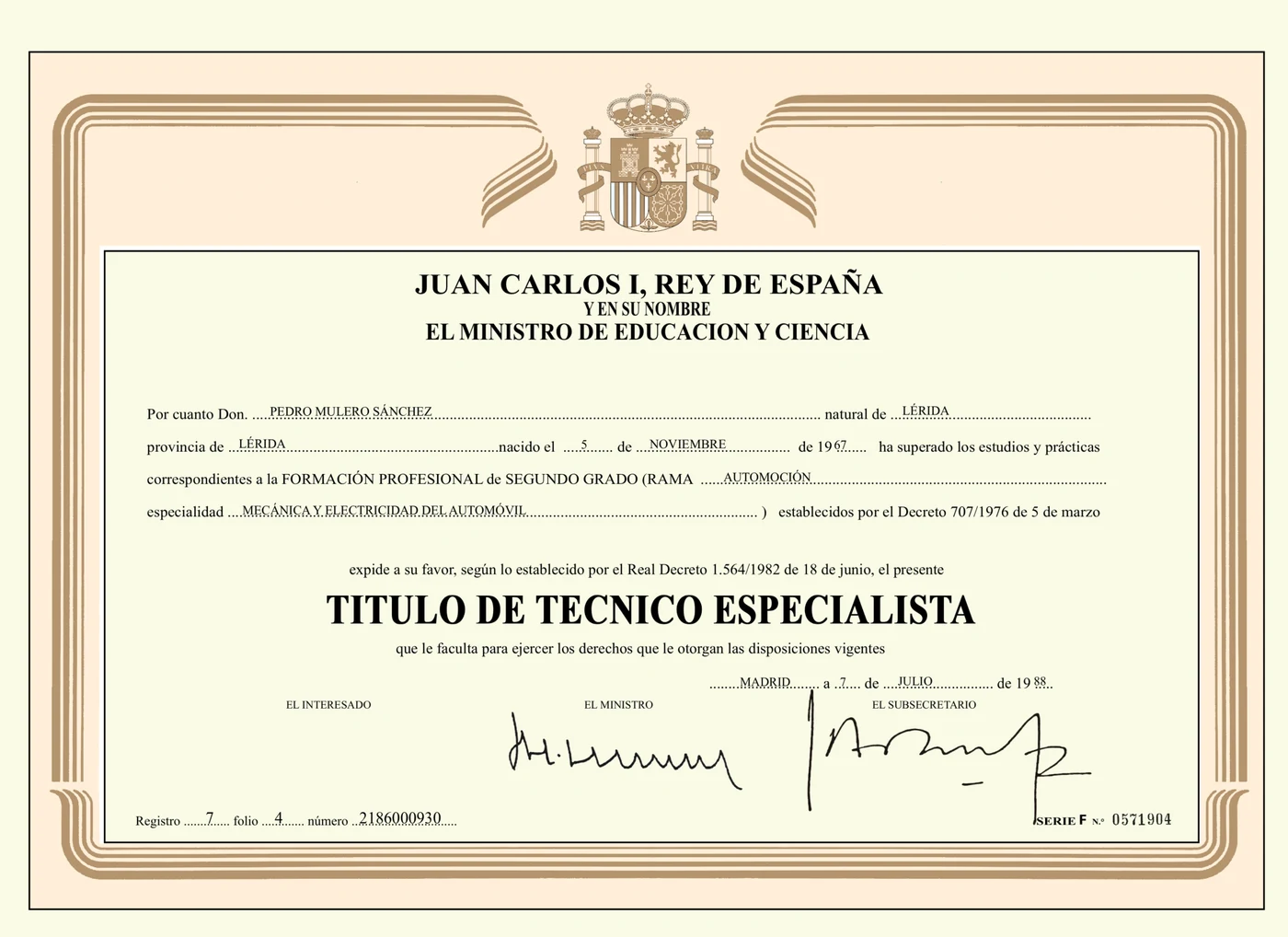 Specialist Technician in Motor Vehicles - Vehicle Mechanics and Electrics
 Court expert witness · ASPEJURE member no. 03667
Speciality listed on the rolls of court experts throughout Spain.
Frequently asked questions
How long do I have to claim?
Under the Civil Code rules on hidden defects, six months from delivery of the vehicle, which is a short window. If you bought from a trader (a dealership or a used-car business), the statutory guarantee of conformity lasts three years and, for a used vehicle, never less than one. And if the fault shows up in the first two years (or within any shorter period agreed for a used vehicle, never under one year), the law presumes it was already there and it is the seller who has to prove otherwise. That is why the first thing we check is the date and who sold it to you.
I bought from a private seller. Can I do anything?
Yes, though the route is different: the Civil Code with that six-month window and fraud if the seller concealed something they knew about. What has to be proved is the same: that the defect was already there and could not be seen.
How do you prove an odometer has been clocked?
By cross-checking the roadworthiness test readings, the mileage on service invoices and the figures stored in the vehicle's own control units, which are usually several. When those three sets of records do not agree, the fraud shows.
Free first consultation and a fixed written quote. I reply within 24-48 working hours.